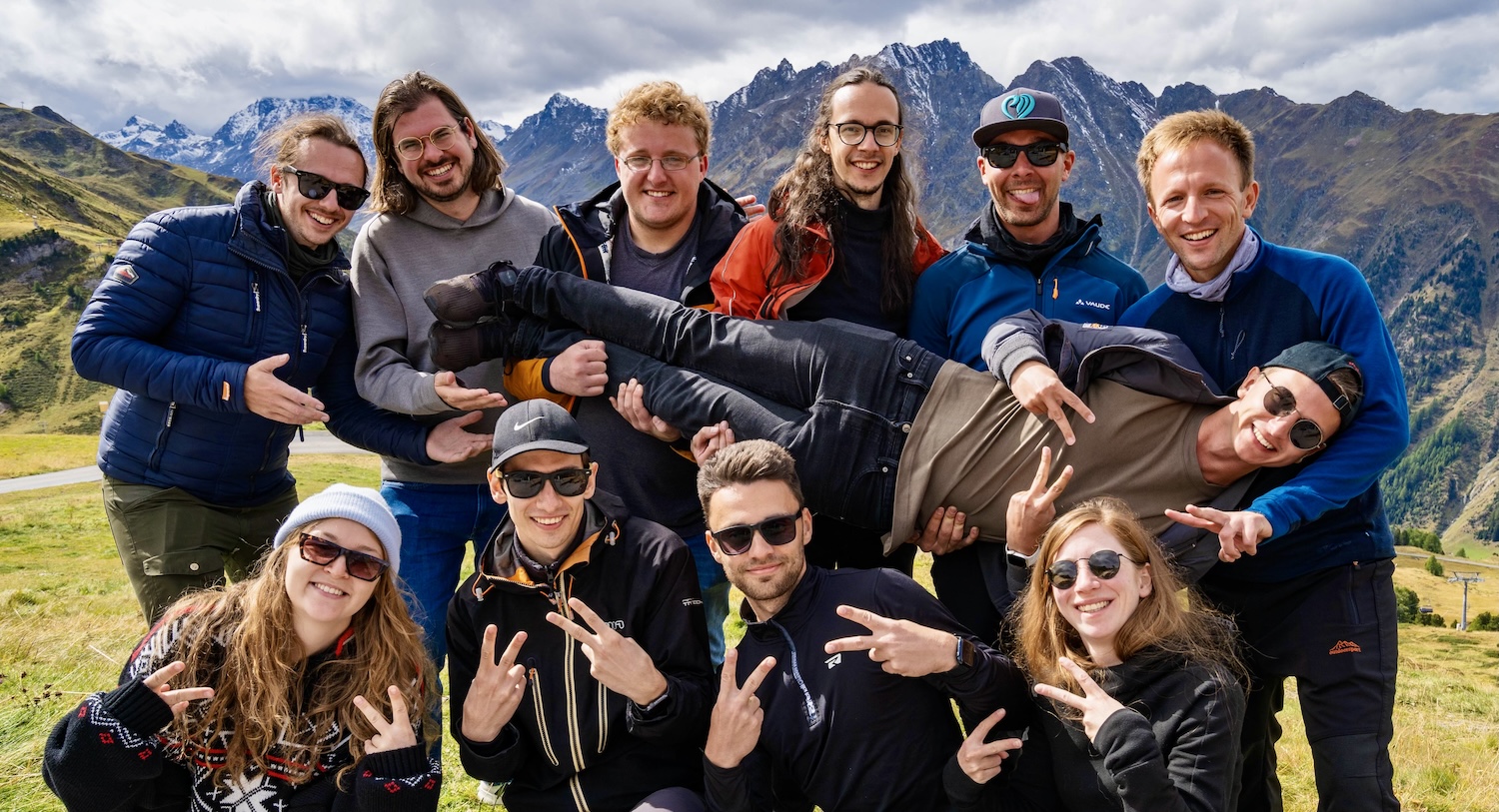
- Research Group Team — Doctoral Seminar September 2024

Two papers, two conferences, and two very different perspectives on primary computing education. We are happy to share two new paper acceptances from our group. 🎉 The research paper Soft Competition in Tangible Game-Based Learning for Primary Computing Education has been accepted at the 15th International Conference on Games and Learning Alliance and will be presented in L'Aquila, Italy. Competition can make learning games engaging, but rankings, speed, and direct comparison can also create social pressure. In this paper, we introduce soft competition, a design pattern that keeps visible progress and a clear win condition while moving away from learner-versus-learner comparison.

Are you passionate about education and eager to make a difference in the academic journey of students? We invite motivated students like you to join our team as a tutor for Introduction to Programming or Patterns in Software Engineering and play a key role in shaping the learning experience. This is a unique opportunity to deepen your software engineering and programming skills while helping your peers. Join us and become a valuable member of our highly motivated, international student team! 🚀

The work-in-progress paper µEd API: Towards a Shared API for Education Microservices has been accepted at the 13th ACM Conference on Learning @ Scale (L@S 26) and will be presented in Seoul, South Korea, as part of the joint Festival of Learning 2026. Education platforms today often lock institutions into a single ecosystem. Whoever wants AI-powered feedback, assessment, or chat-based tutoring is left with whatever the platform happens to offer — or has to build a custom integration for every new tool. Learning at scale depends on exactly this kind of domain-specific automation, so the choice of platform quietly turns into a choice about what is pedagogically possible.

The paper On-Premise Kubernetes in Software Engineering Education: An Experience Report has been accepted at the ICSE-SEET track (Software Engineering Education and Training) and will be presented at ICSE’26 in Rio de Janeiro, Brazil. Modern software engineering courses increasingly need Kubernetes experience, but many universities face strict data protection requirements, limited budgets, and constrained IT resources. This paper reports how we designed and operated a multi-node, on-premise Kubernetes setup tailored to these educational constraints using RKE2, Ansible, and Rancher.

Lukas and Ramona have been awarded the Women in CIT Travel Awards. This allows both to attend conferences in the respective fields and fosters exchange within the international STEM community. Lukas will attend the Serious Play Conference Europe in Mainz, discussing insights from his master’s thesis. Ramona will join the Interaction Design and Children (IDC) Conference, a key venue for research on human-computer interaction and computing education. Both look forward to engaging with peers and gaining new impulses for their ongoing research projects.

My iPraktikum journey was a big step forward, turning challenges into opportunities and sharpening my skills while making lasting professional connections. It highlights how hands-on learning can make a difference.

Students go through the ABCs of software development, mastering practical skills along the way. This is hands-on experience, not just theory.

The level of creativity and dedication was beyond expectations. Always nice to get fresh and challenging thoughts in, to share networks, and, most and foremost, to have fun together.
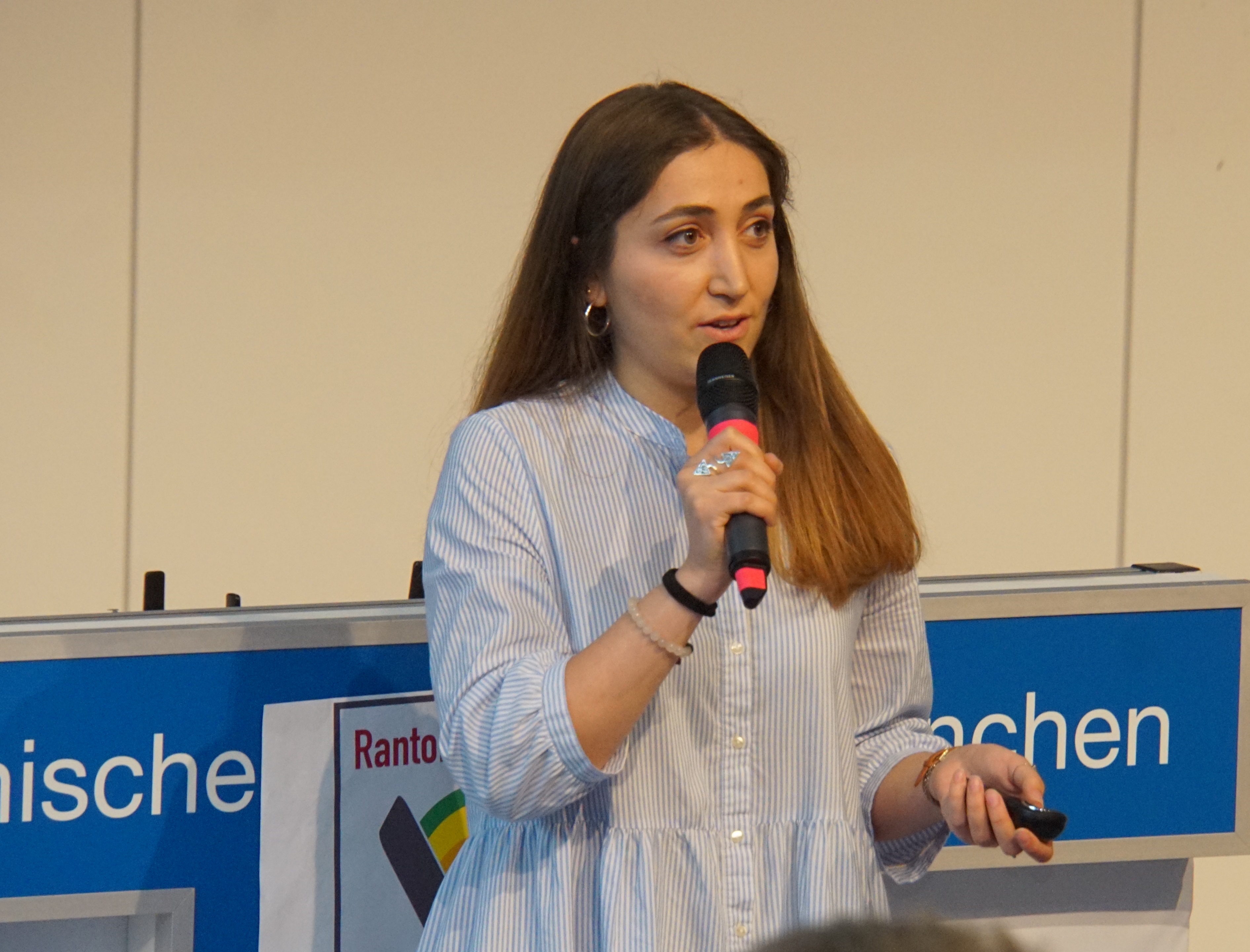
From hesitant beginnings to confident steps forward, my journey in iPraktikum marked a progression from student to team coach and project leader. Each semester was a chapter of growth, learning, and leadership.

I'm really proud about what the team has achieved. Having a fully-running production deployment running on our own infrastructure within 30 minutes from receiving their server codebase felt great!

Great to see the impact of this fantastic university course. This course combines theory with practice and crafting valuable products.
The iPraktikum is a practical course centered around innovation. It covers mobile applications for smart devices, ranging from standalone applications, embedded systems including hardware and sensors to the design of modern interfaces for complex business applications.
Students learn and apply software engineering and usability engineering techniques. This includes object-oriented modeling and system design as well as the realization of graphical user interfaces, usability testing, continuous integration and continuous delivery.
Real industrial partners provide problem statements as clients. 8-12 companies participate in the iPraktikum every semester, each with a different problem statement and its own team. 60-100 students regularly participate and deliver these applications using agile techniques and communicating continuously to their clients.